
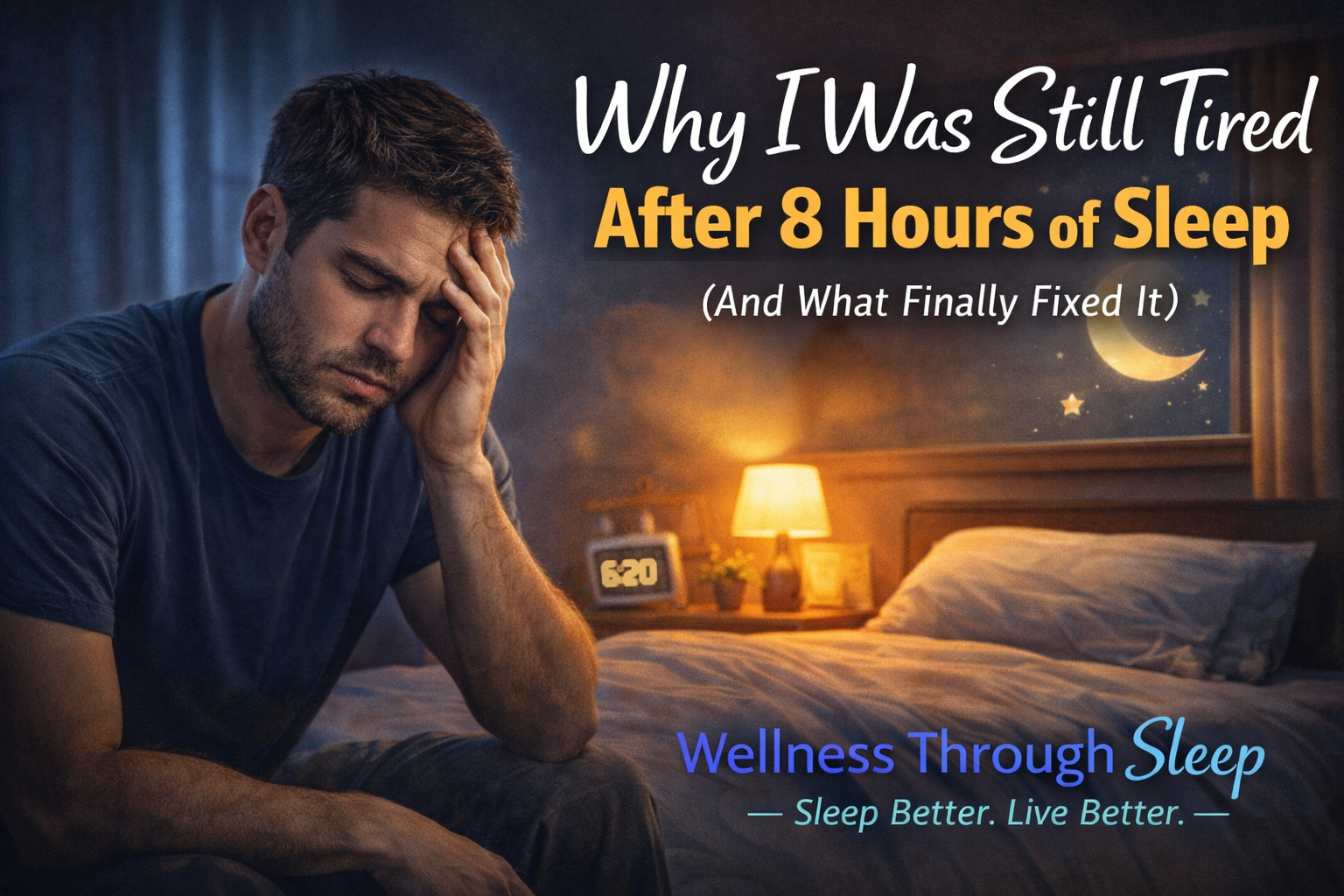
I used to feel tired after 8 hours of sleep, and it honestly made no sense to me.
I was doing everything right…
I’d go to bed on time.
I’d get my full 7–8 hours of sleep.
I’d even avoid late-night caffeine.
But every morning… I still woke up tired.
Not just a little groggy I’m talking about that heavy, drained feeling. The kind where even getting out of bed feels like a task. The kind where coffee doesn’t even help anymore.
And honestly, it started to frustrate me.
Because if I’m sleeping enough… why do I feel like I didn’t sleep at all?
The Truth I Didn’t Realize at First
It took me a while to understand this:
👉 It’s not just about how long I sleep it’s about how well I sleep.
That one realization changed everything.
I learned that my body doesn’t just need sleep time it needs quality sleep cycles. And without those, even 8 hours can feel like 3.
What Was Actually Messing Up My Sleep
When I really paid attention, I started noticing a few things I had been ignoring.
1. My Mind Wasn’t Actually “Off” at Night
Even though I was lying in bed, my brain was still running.
Thinking about work.
Replaying conversations.
Scrolling through random things.
I realized my body was in bed… but my mind was still awake.
2. My Phone Was Quietly Ruining Everything
I used to scroll before sleeping just for “a few minutes.”
But those few minutes turned into 30… sometimes an hour.
The blue light, the constant stimulation it was keeping my brain alert without me even realizing it.
3. My Sleep Was Getting Interrupted (Even If I Didn’t Notice)
This one shocked me.
Even small things, noise, light, and temperature were breaking my deep sleep cycles.
I didn’t fully wake up… but my body did.
And that was enough to leave me feeling exhausted in the morning.
4. I Was Going to Bed Stressed
I didn’t think stress affected my sleep that much.
But it does.
When I went to bed with tension, my body stayed in a semi-alert state like it couldn’t fully relax.
So even if I slept… I never truly rested.
What I Changed (And What Actually Worked)
I didn’t do anything extreme. No complicated routines. No crazy hacks.
Just a few simple changes that made a real difference.
✔ I Stopped Using My Phone Before Bed
At least 30–45 minutes before sleeping.
At first, it felt weird.
But within days, I noticed I was falling asleep faster.
✔ I Started “Slowing Down” My Mind
Instead of jumping straight into bed, I gave myself a buffer.
Sometimes just sitting quietly.
Sometimes light stretching.
Sometimes doing nothing at all.
It helped my brain understand: it’s time to shut down.
✔ I Made My Sleep Environment Better
I paid attention to small things:
- Less light
- Less noise
- Comfortable temperature
These tiny adjustments made my sleep deeper without me even realizing it.
✔ I Focused on Calm, Not Just Sleep
This was the biggest shift.
Instead of forcing sleep, I focused on relaxing my body.
Because sleep isn’t something I can force —
it’s something that happens when my body feels safe enough to let go.
What Happened After That
Within a week or two, things started to change.
I woke up feeling lighter.
Less groggy.
More clear-headed.
Not perfect every day but definitely better.
And the biggest difference?
👉 I stopped feeling like I needed to “survive” the morning.
If You Feel the Same Way…
If you’re getting 7–8 hours of sleep but still waking up tired…
I get it.
I’ve been there.
And it doesn’t mean something is wrong with you.
It just means your sleep might not be as restful as it should be.
Start With This (Simple Step)
Don’t try to fix everything at once.
Just start here:
👉 Give your mind 30 minutes of calm before sleep no phone, no noise, no stimulation.
That one habit alone can change more than you expect.
Final Thought
I used to think I needed more sleep.
Turns out…
👉 I just needed better sleep.